on fragrance classification
In an increasingly digital world, it’s become increasingly difficult to define (and market) something as sensory as scent. Enter: olfactive families. (Ok, fragrance classification systems have been around since the early 20th century but have become arguably more important in recent years when 30% of online purchases are beauty products.)
Olfactive simply means of or relating to the sense of smell, and a family, here, is a closely related series of elements or chemical compounds. The related elements, in this instance, are fragrance notes, not the chemicals that make them up. Olfactive families define fragrances by how they smell, not by their ingredients. An important distinction when a single chemical compound can take on wildly different aromas. (For example, indole is found in coal tar, feces and certain flowers, like jasmine.)

a brief history
Fragrance and perfumery practices date back thousands of years, but modern chemistry and synthesis changed the game in the last 100, driving the need for classification systems. These systems have evolved from simple raw material groupings to complex, standardized and consumer-friendly systems.
Pre-1900s: Scents are categorized by their origin (flowers, spices, woods, resins) or by their function (incense, perfume, medicinal oils).
1917: Two young chemists working for the US Army’s chemical warfare division are tasked with concocting harmless but foul-smelling gases to wage psychological warfare on the enemy. The stink of their chemicals sticks to their hair, skin and clothes, so at night, they sleep outside. Under the stars, smelling horrendous, Ernest Crocker and Lloyd Henderson began dreaming up their taxonomy of odors.
They came up with a four-digit coding system that could, in theory, categorize every scent known to man. According to them, just as there are three primary colors, there are four primary odors: fragrant, acid, burnt and caprylic. The Crocker-Henderson Odor Classification System applied eight intensity levels to these four primary odors to come up with a unique four-digit code for every conceivable odor. For example, vanillin, the primary chemical compound responsible for the aroma and taste of vanilla, is 7122 – fragrant level seven and acid level one, burnt and caprylic both level two.

While this all made sense to our two nerdy chemists (complimentary), the system’s “semi-qualitative” nature made it a commercial failure. For another 30ish years, fragrance development continued as a trial-and-error process. Most great creations and commercially successful perfumes came together by chance.
1946: Born in Grasse, France, the perfume capital of the world, legendary perfumer Jean Carles, is known for creating the Givaudan Perfumery School in 1946, the world’s very first perfume school. His mastery over balance and harmony is responsible for iconic fragrances such as Miss Dior’s original 1947 formula. As both an educator and creator, his foundational methods still influence the industry today.
Disinterested in the haphazard method of trial and error, Jean Carles created a systemic, multi-step approach to perfume creation, emphasizing the importance of understanding the roles of different fragrance notes and how they interact. The goal of The Jean Carles Method is to build a mental olfactory library by analyzing how materials behave alone and when combined in different ratios, ensuring a rational approach to perfume composition.
The first step of the process is a comparative study of different fragrance families, which helps facilitate each student’s grasp of each one’s nuances, highlighting the differences and unique qualities inherent to each. For this, Jean Carles created a table of 60 odors organized by tenacity and volatility.

A deep understanding of the nature of each scent – how it changes over time, its rate of evaporation – helps the perfumer understand where it fits into the fragrance pyramid.
Very volatile products lacking tenacity are considered top notes. Made up of light molecules, they’re first to hit the nose but they evaporate quickly, like lemon, lavender and coriander. Base notes (heavier molecules) have low volatility and high tenacity. They last, stay with you and change over time. Popular base notes include sandalwood, patchouli and vetiver. The in-between products of intermediate volatility and tenacity create the character of the fragrance and are often called the heart notes. These middle notes are considered modifiers of base notes – they give the perfume its personality. They are perceived at different rates and hang on for varied amounts of time.
These guidelines helped create the framework for a balanced fragrance. It was then up to the perfumer to create a unique harmony of fragrance notes that could be a commercial success.
A man of the people, Carles felt it important to democratize perfumery by creating a simple, readily available training method that would remove the obstacle of years-long apprenticeships keeping young perfumers from making a living. After all, originality cannot be taught and a highly developed sense of smell cannot be bought. Carles’s straightforward method, still in use today, invites raw talent and dreamy creativity into the lab.
1949: Meanwhile, in Austria, Perfumer Paul Jellinek was captivated by the psychological effects of fragrance. In the 1949 first edition of his book The Psychological Basis of Perfumery, originally published in German, Jellinek asserts:
“We receive from our sense of smell, more than from any other sense, unconscious impressions; unconscious not so much as regards their origin and cause as with respect to the manner in which they affect us physically and psychologically.”
The Psychological Basis of Perfumery contains a lot of fascinating stuff, like the assertion that successful perfumes often contain unpleasant components (like musk) because they mimic bodily odors and therefore enhance sexual attractiveness. It also contains some less-imaginative opinions in its exploration of the erotic effects of perfume materials, perfume and personality and the masculine and feminine aspects of perfume materials. Like that attraction of the opposite sex is the single overriding motive for perfume use by women, and that women should choose fragrances based on whether they’re more “mother” or “mistress.”
He goes on to say,
“I regard the elucidation of the relationships between the causes and effects that are mediated by the sense of smell and that are important in human life as one of the most important objectives of a perfumery that aspires to be scientific.”
Jellinek’s extremely scientific Odor Effects Diagram aligns scent classification with psychological effects on two axes terminating at opposite poles: erogenous vs. anti-erogenous and narcotic vs. stimulating. The four key effects align with four primary odors, much like Crocker-Henderson method: alkaline vs. acid and sweet vs. bitter.

Beyond the four key effects, Jellinek presents prescriptive fragrance combinations: Narcotic + Anti-erogenous = Calming, Anti-erogenous + Stimulating = Fresh, Stimulating + Erogenous = Exalting, Erogenous + Narcotic = Sultry. As a tool, the Odor Effects Diagram analyzes how odors effect the human psyche and soul, bridging artistic perfumery and scientific psychology.
The Psychological Basis of Perfumery is considered the only work of its kind, with Jellinek’s ideas influencing modern perfume advertising and aromatherapy. His later work, The Practice of Modern Perfumery, puts his ideas into practice (it teaches you how to make an erotically stimulating perfume that will be commercially successful).
1984: Things came full circle (see what we did there?) with the advent of Michael Edwards’ Fragrance Wheel, which sets out to describe rather than prescribe.
Michael Edwards launched Fragrances of the World as a resource for retailers in 1984. The initial guide contained 323 fragrances. Since then, Edwards and his team have personally tested more than 6,500 fragrances and cross-checked the assignments to families with the perfumers and evaluators through an independent and impartial process.

The Michael Edwards Fragrance Wheel is a circular diagram that shows relationships between scent families, refining Jellinek’s take. It classifies fragrances into four main families (woody, floral, amber, fresh) and then into subfamilies by varying degrees of each character (fresh floral, woody amber, etc.). Some were again divided into composition gradings for commercial description (crisp, classical, rich). Families next to each other share similar characteristics while those opposite to one another are contrasting.
The fragrance wheel aids the consumer by putting fragrance terms in commercially understandable language and a visually digestible format. It simplifies perfume selection by mapping how scents relate to one another, democratizing fragrance knowledge like Jean Carles set out to do. When you learn which families you enjoy, you can explore adjacent ones and know to avoid those across the wheel.
While there have been more recent attempts to define fragrance (ex: Stephen V. Dowthwaite’s PerfumersWorld, 1992, and Manuel Zarzo and David Stanton’s 2009 paper, “Understanding the underlying dimensions in perfumers’ odor perception space as a basis for developing meaningful odor maps”), Michael Edwards’ classification scheme is still cited as one of the most comprehensive references for commercial fragrances, and is the one we use at daily.
the olfactive families
floral family
The floral family smells of freshly picked flowers, walking through a blooming garden or whispers of springtime in sun-drenched air. Floral fragrances exude romance and femininity, ranging from delicate to bold.
Classic floral perfumes highlight single flowers, like rose or jasmine, or feature a bouquet of floral fragrances, mixing jasmine, lily of the valley and carnation. Green florals use leafy notes or a hint of dew to add an uplifting burst of freshness, evoking the impression of a flower in its natural setting. Soft florals are powdery and feminine, and may contain aldehydes, iris root or vanilla. Floral amber combines flowers with sweet, spicy elements such as amber and incense.
Key notes: rose, jasmine, lily, orange blossom
Classic examples: Chanel No. 5, Dior J’adore, Guerlain L’Heure Bleue, Gucci Bloom, Dior Diorissimo
Modern interpretations: Parfums de Marly Delina, Snif Rose Era by Monet, Baccarat Rouge 540, Valentino Born in Roma Donna, Phlur Missing Person
amber family
Amber scents are rich, spicy and often sweet, creating an aura of depth and sensuality. Sometimes referred to as “oriental,” an outdated reference to countries east of Europe, they evoke the exoticism of faraway places like the spices traded along the Silk Road. Warm, luxurious and are often intense, amber scents are preferred by those looking to wield a strong, lingering presence that makes a statement.
Classic amber perfumes are rich and opulent, built around spices like cinnamon, clove, nutmeg or cardamom or resinous notes such as frankincense, myrrh or benzoin, opening amber’s rich, deep character. Soft amber fragrances blend warm herbs, incense or carnation for a cozy, indoor feel. Soft amber includes fragrances that add vanilla or tonka bean to create a sense of warmth or comfort. Woody amber combines deep, dry tones with earthy woods like patchouli and sandalwood, for a deep sense of complexity, sometimes with smoky notes trailing behind them.
Key notes: vanilla, amber, cinnamon, incense, cardamom, sweet resins
Classic examples: Coty Ambre Antique, Guerlain Shalimar, Jean Desprez Bal à Versailles, Yves Saint Laurent Opium
Modern interpretations: Dior Ambre Nuit, Jo Malone Midnight Musk & Amber, Czech & Speake Amber 7
woody family
Woody perfumes are sophisticated and grounding, characterized by their dry, warm and earthy notes. Woody scents can range from the light freshness of bamboo to the deep, resinous richness of oud and palo santo. This category is favored by those who crave earthy authenticity.
Classics showcase notes like cedar, sandalwood, or vetiver. Mossy wood has a moist, earthy character, often featuring oak moss and amber. Dry wood blends smoky, leathery tones with tobacco.
Key notes: cedar, sandalwood, vetiver, oak moss, patchouli, tobacco
Classic examples: Terre d’Hermès, Chanel Bois des Iles, Serge Lutens Féminité du Bois, Diptyque Paris Tam Dao
Modern interpretations: Le Labo Santal 33, Aesop Hwyl, Comme des Garçons Wonderwood, Byredo Super Cedar, Bois Impérial by Quentin Bisch
fresh family
The fresh family is the broadest umbrella on the fragrance wheel with five subfamilies: aromatic, citrus, aquatic, green and fruity. Light and invigorating, fresh scents share a breezy, youthful feel that makes any moment more alive.
Aromatic scents mix lavender with woods, oak moss and coumarin. Citrusy perfumes focus on lemon, bergamot or grapefruit. Aquatic fragrances evoke the ocean or rain with notes of sea salt and ozone. This family is perfect for those who enjoy light, refreshing fragrances that evoke a sense of cleanliness and vitality. Green scents smell like freshly cut grass, leaves or cucumber. Fruity perfumes bring sweet edible notes of peach, berries or rhubarb.
Key notes: lavender, bergamot, lemon, green herbs, aquatic notes
Classic examples: 4711 Original Eau de Cologne, Acqua di Parma Colonia, Chanel No. 19, Estée Lauder Pleasures, Guerlain Vetiver
Modern interpretations: Glossier You, Byredo Blanche, Phlur Father Figure, Acqua di Parma Buongiorno, Louis Vuitton Attrape-Rêves
expanded fragrance vocabulary
While these scent descriptors aren’t found on the Michael Edwards Fragrance Wheel, they are worth mentioning as they expand and specify our vocabulary when classifying fragrance.
gourmand
Gourmand fragrances have a deliciously edible, rich quality to them. They range from the obviously sweet scents of desserts like caramel or chocolate, to the subtle creaminess of macadamia and coconut milk that can bring a mouth-watering quality to woody or floral scents.
Key notes: vanilla, caramel, chocolate, coffee
Classic examples: Xerjoff Italica, Killian Black Phantom, Dior Vanilla Diorama
Modern interpretations: Giardini di Toscana Bianco Latte, Dedcool Mochi Milk, Commodity Milk+, Eilish by Billie Eilish, Phlur Vanilla Skin, Snif Crumb Couture
fougère
Fougère (pronounced foo-jair), French for “fern,” describes fragrances with fresh, grassy and mossy scents designed to evoke a forest floor. Jaunty and eternally elegant, fougère fragrances combine herbs, most often lavender, with oakmoss and coumarin for an earthy, ferny scent.
Fresh and herbaceous, fougère perfumes combine aromatic herbs with woods.
Key notes: lavender, oak moss, coumarin (tonka bean), herbs
Classic examples: Houbigant Fougère Royale, Jean Paul Gaultier Le Male, Fabergé Brut Original, Paco Rabanne Pour Homme, Guy Laroche Drakkar Noir, Davidoff Cool Water
Modern interpretations: Tom Ford Beau de Jour, Nishane B-612, Penhaligon Sartorial, Faris by Kajal, Replica At The Barber’s
chypre
Chypre (pronounced sheep-ra) is the French word for the island of Cyprus. During the Crusades and medieval period, French perfumers adopted thousand-year-old techniques and ingredients, like labdanum, they found in Cyprus, importing the name to describe the scent profile. It was later popularized by François Coty’s 1917 fragrance Chypre, defined by notes of oakmoss, labdanum and citrus. In today’s perfumery, chypre refers to earthy and complex blends of citrus top notes upon a floral heart and mossy base. They are often described as sophisticated, mysterious and dry with high longevity.
Key notes: bergamot top, jasmine or rose heart, mossy woody base
Classic examples: Chypre de Coty, Guerlain Mitsouko, Rochas Femme, Robert Piguet Bandit, Clinique Aromatics Elixer
Modern interpretations: Narciso Rodriguez for Her, Chanel Coco Mademoiselle, Dior Diorama, Chloé Nomade
leather
Fragrance and leather have been intertwined for thousands of years, as skins were rubbed with fragrant bark, blooms, spices and natural oils to mask the odors the tanning process left behind. Dry, smoky and sometimes animalic, these scents are reminiscent of worn leather.
Key notes: smoke, birch tar, tobacco, oud
Classic examples: Chanel Cuir de Russie, Dior Fahrenheit, Knize Ten, Hermès Bel Ami
Modern interpretations: Tom Ford Tuscan Leather, Gucci Guilty Absolute, Memo Paris African Leather, Atelier Cologne Cedre Atlas, Tom Ford Ombré Leather
daily candles
When it came to deciding on daily’s six inaugural scents, there was a lot to consider.
We wanted a balanced collection. There had to be something for everyone, not just for us. If you hated a scent, we needed to be able to offer a contrasting one across the fragrance wheel. If you loved a scent, we needed to be able to tell you which one to try next.
We wanted a unified collection. The scents all had to work together. In our creative director’s mind, they were a chorus of voices telling parts of the same story.
We wanted to make you feel something. We wanted fragrances with depth and complexity, just like us. Curating an immersive vibe was always the goal, so a simple, straightforward fragrance just wouldn’t do.

coastal
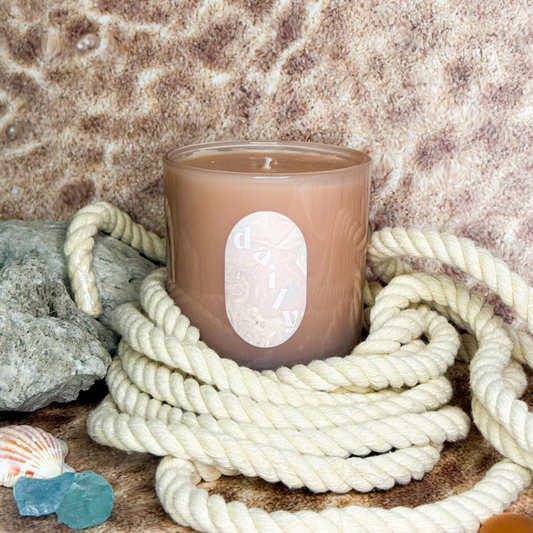
Coastal is a woody fragrance with aquatic elements and a touch of spice. It opens with oceanic sea salt and seaweed then tumbles into a fresh, clean scent of balsam fir and pink pepper with balsamic, resinous styrax. Long-lasting base notes pepperwood, ambergris and Hercules’ club leave an impression of driftwood with a bark-like aroma and smooth, resinous finish.
It reminds us of a beach house in winter, a symbol of introspection. The safety and coziness of a crackling fire contrasted with rough seas and salty winds outside.

new leaves
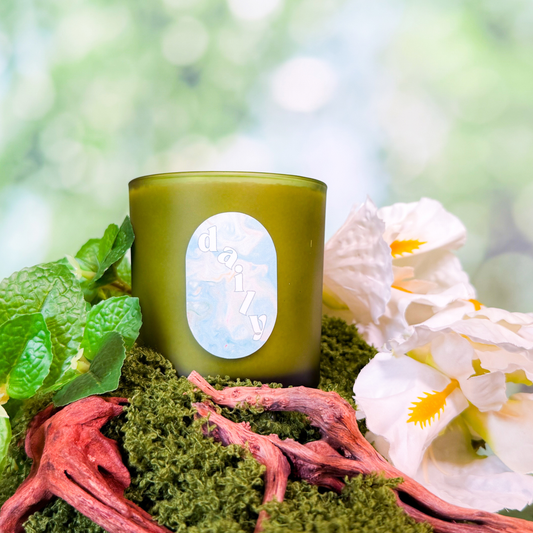
New leaves is a woody amber fragrance with green and floral elements. It opens with fresh and herbaceous cardamom, cucumber and mint, passing through iris and violet florals before landing the base of creamy sandalwood and cozy cedar.
It reminds us of the first blooms of spring demanding to grow after a long, cold winter. New leaves is wild, expressive and brave.

clean
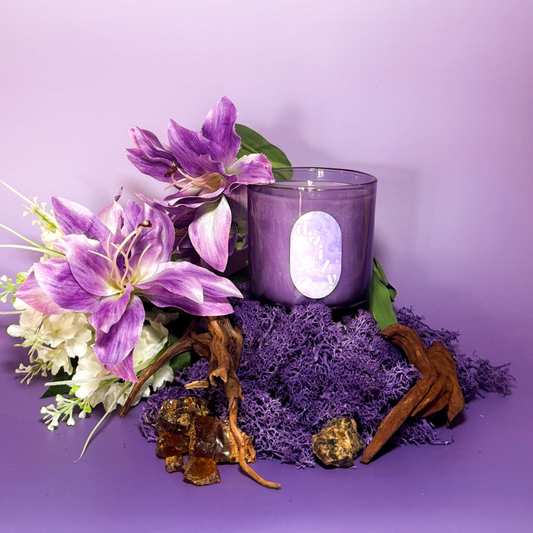
Clean is a soft floral and sits between floral and amber on the fragrance wheel. It is marked by its crisp, aldehydic nose of citrus, clear musk and leaves, giving it a bright effervescence. At the heart are spicy notes and florals orange blossom and rose. All are grounded in a white floral bouquet beside deep woodsy, amber and vanilla notes.
Timeless, elegant and achingly romantic, clean reminds us of falling in love with yourself. What it feels like knowing you’d protect yourself at all costs.

silk chiffon
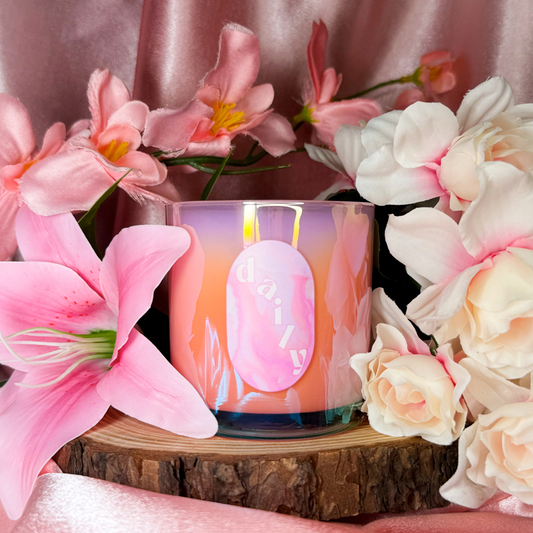
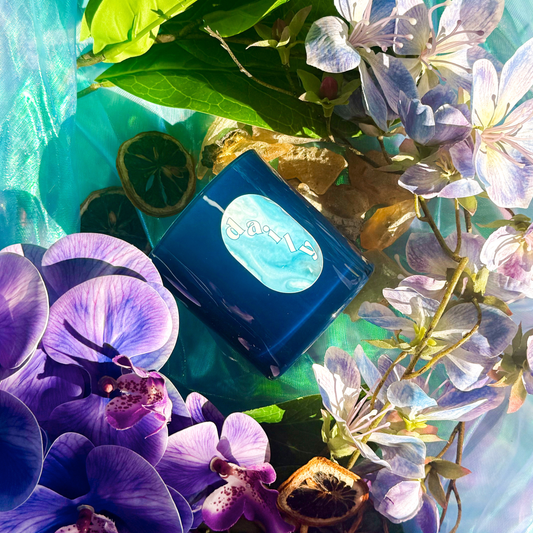
Silk chiffon is another soft floral, this time with juicy, fruity elements. Top notes of gardenia and freesia open the bouquet of mouth-watering pomegranate and tropical lily. A base of cashmere musk and woods make silk chiffon a sultry contrast to clean’s lightness.
Soft, tactile and sumptuous, silk chiffon will have you feeling intoxicated and whimsical. It reminds us of sapphic desires and kissing other women.

lush
Lush is an intense and luminous woody amber with a spicy floral heart. A top note of lemon opens with a zing before blossoming jasmine and spicy saffron intoxicate you. Finally, the fragrance sinks into its resinous, creamy base of amber, ambergris and soft cedar.
Named for its too-muchness, there is something undeniably sexy about lush. It reminds us of wearing lingerie under a slinky little black dress and leaves us feeling confident and unstoppable.

midnight
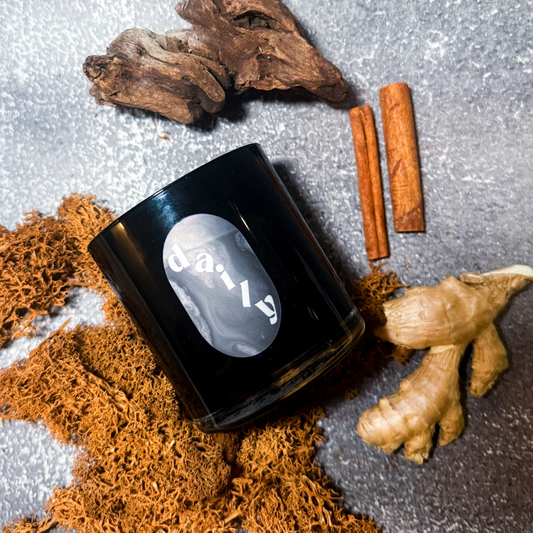
Midnight is a classic amber fragrance steeped in spicy aromatics and tobacco and gourmand cacao and vanilla. Top notes are a warm spice bundle of ginger, clove and cardamom with intense, smoky tobacco. Warm and delicious cacao and vanilla are at the heart of this fragrance, grounded by resinous woody notes.
Intense and alluring, midnight reminds us of being dick-notized. It’s the one booty call you just can’t quit. The iron that cools off but remains in the fire.